




What are the best AA batteries for winter you ask? Well, the answer may surprise you! And since AA’s are used for so many different applications these days, it only makes sense to make sure they’re usefulness includes extreme temperatures as well.
Different Battery Chemistry
Before we go any further let’s differentiate the types of AA battery chemistry for which you, the average consumer, might be using.
Carbon-zinc 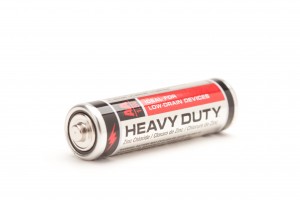
These are your run-of-the-mill, (sometimes no-name) dollar store batteries that are usually $1 per 4-pack. They’re cheap, because they don’t last long and their power capacities are less. They also won’t work too well in temperatures below 20°F (-6°C) and have a shorter shelf-life. At a temperature of 0°F (-17°C) they quickly lose 75% of their service life.
Operating a battery-powered puppy on Christmas morning, (while probably a blessing) will only get a couple of hours worth of ear-piercing yelps before these AA cells crap out! And if you live in an igloo… oh well.
Alkaline
The gold-standard. The one that’s readily available at every corner store, gas station, subway station, supermarket, big-box store and shoeshine stand the world over. You know the brands too. Basically Duracell and Energizer are your choices.
When compared to the carbon-zinc variety, their claim to fame is long-lasting power. Temperature-wise, they’ll be pretty good down to about 0°F. But…go BELOW zero (-17C) and their useful life is decreased by about 60%. They can also sit unused for up to decade and still provide useful power. The downside…they’ve been known to leak on occasion…whether used or not. Some users refer to them as “alkaleaks”.
Unless you have earplugs, that Christmas morning toy-puppy may end up under the wheels of a snowplow, (going-going…gone) when the promises of the “Energizer bunny” become apparent.
Lithium 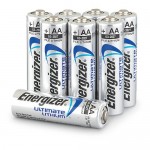
The ultimate ones! So, here’s where your question about the best AA battery in cold weather, get’s closer to getting answered!
First of all, a lithium AA won’t offer the identical lasting power as an alkaline AA. BUT, and this is a BIG BUT…its operating temperature is good to -40°F! — which happens to be the same temperature in Celsius! Shelf life is still good for ten years, and even though SOME of their resources are robbed once temps go sub-zero, it’s only around 20%.
Rechargeable Nickel-Metal-Hydride (NiMH) 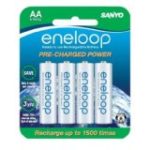
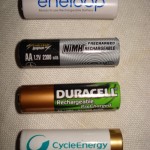
We talk about NiMH a lot here at Lightsngear… and with good reason. They’re very economical and they hold their charge on the shelf up to a year. The downsides are that their total capacity is about half of what the average alkaline is, and they won’t perform too well at sub-zero temperatures.
My Best Recommendation
So from the information above, it’s recommended that the best type of AA battery for the winter are the lithium variety. Keep in mind these are 100% disposable. So as much as I recommend rechargeable batteries for just about EVERY application, these are better for use in very cold weather.
If you have any questions or comments, please leave them in the section below.
 Follow
 Email it!







Hello and thank you for a great website and a really interesting article on batteries. I’ve often wondered about the different types but now at last I know what they are and what are the benefits of each.
Cheers. Peter
Thank you Peter! I aim to inform.
I honestly didn’t think that the makeup of the various batteries really impacted their performance. I suppose it makes sense, and it especially does now after having read your post.
I’m glad you found the post informative Jared! Thanks.
I am glad to know about these things about AA batteries. Thanks for the very informative post.
Thank you! You’re welcome 🙂